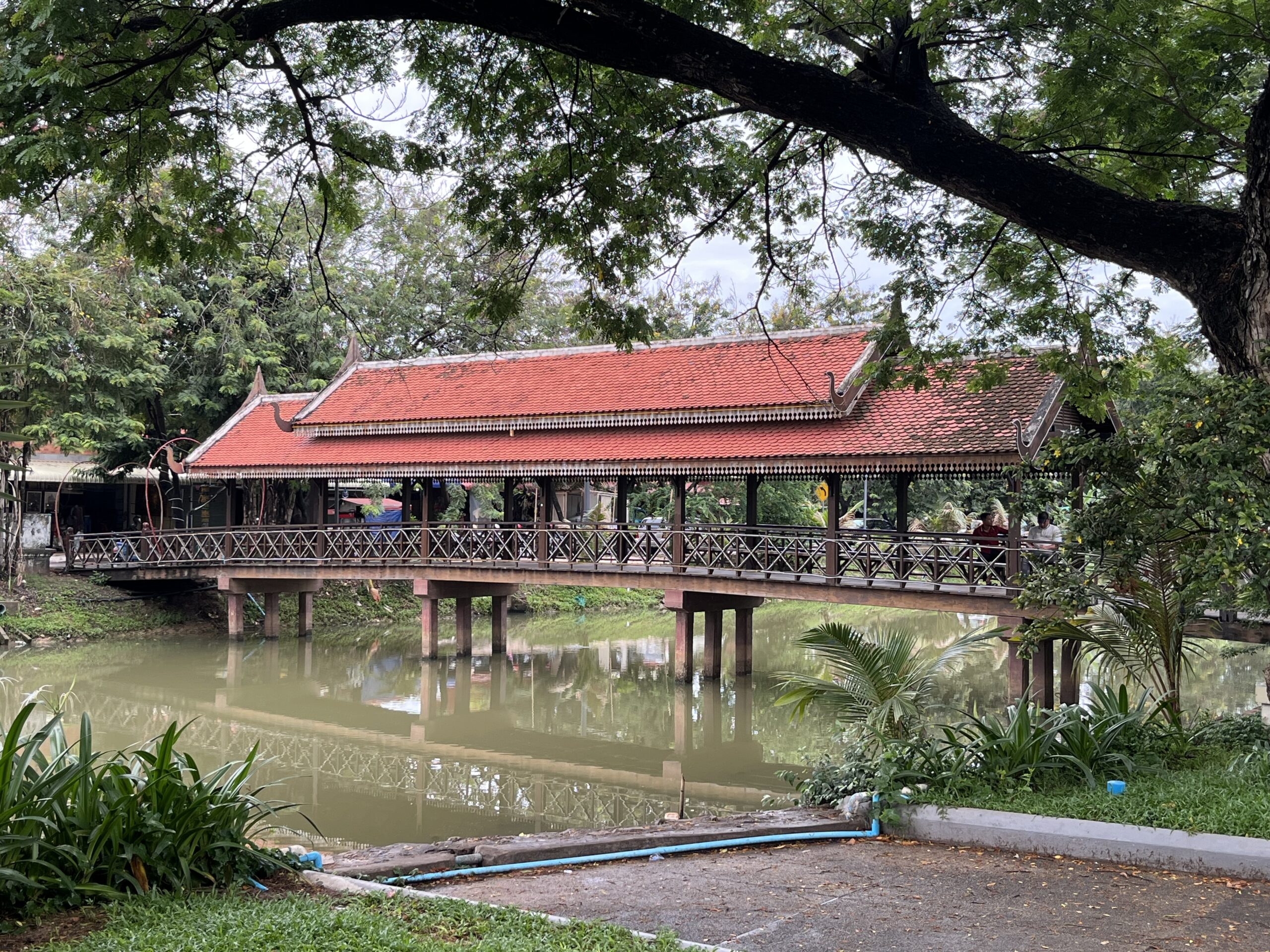
When it comes to contrasts, this is certainly one of them. From built-up, insanely busy Ho Chi Minh City to Siem Reap seemed a huge change. Best known as the gateway to the magnificent Angkor Archaeological Park, home to the world-famous temple complex Angkor Wat, the town is steeped in history and culture, and seems a quiet town compared to Ho Chi Minh. However, it has its moments of being a bustling tourist hub, probably best shown by the preponderance of western dishes on the local restaurant menus (fish and chips, spaghetti bolognaise, pizza etc).


But a walk along the river feels very civilised, even if you’re stopped every couple of metres by a tuk-tuk driver offering a tour of the city. We even made a few purchases in the riverside market, though I don’t think either of us were brave enough to try the local gin (right) with an eclectic mix of botanicals and a bottle label that looks like it could have come from Dickensian London’s gin palaces.
Our aim today was to visit the Angkor National Museum, a modern, state-of-the-art museum dedicated to the history, art, and culture of the ancient Khmer civilisation, particularly during the Angkor period (9th to 15th centuries). Opened in 2007, the museum provides visitors with essential context for understanding the nearby Angkor temple complex, including Angkor Wat, Bayon, and Ta Prohm. Since our plan is to visit Angkor Wat tomorrow morning we thought that was probably a good idea.
The museum is a great introduction to the Khmer civilisation, with beautiful, detailed sculptures going back to the eighth century. Just for context, this was about the same time that Mercia’s King Offa was building his dyke on the Welsh border in Britain and the Vikings were beginning their raids. But more of Angkor Wat tomorrow.
On our way to the museum, we spent some time at the Wat Preah Prom Rath, a historically significant Buddhist temple located in the heart of Siem Reap.

Although we arrived at the same time as a couple of coach parties, they spent only a few minutes there before heading off, leaving us to enjoy the temple’s serenity. The temple’s origins date back to the early 16th century, with local legends attributing its establishment to the miraculous arrival of a damaged wooden boat carrying a revered monk, Preah Ang Chong Han Hoy. To commemorate this event, a reclining Buddha was carved and remains a central feature of the temple today.
It’s not all peace and love, though. The statue of a dead body being picked apart by vultures is, to say the least, arresting:

The statue represents the body of Ney Khan, a 16th-century adversary of King Ang Chan. Following a decisive battle where King Ang Chan’s forces triumphed, Ney Khan was defeated and left to die. The depiction of vultures feeding on his remains serves as a stark visual metaphor for his demise and the subsequent fall of his influence. It might be a bit unsettling – but it is an integral part of the temple’s rich historical narrative.
After all that, it was back to the hotel for a swim (we are supposed to be chilling, after all!) and a bit of a wander to find some dinner through the busy streets (which seem much busier at night!)

Now we’re off for early start tomorrow for Angkor Wat.
