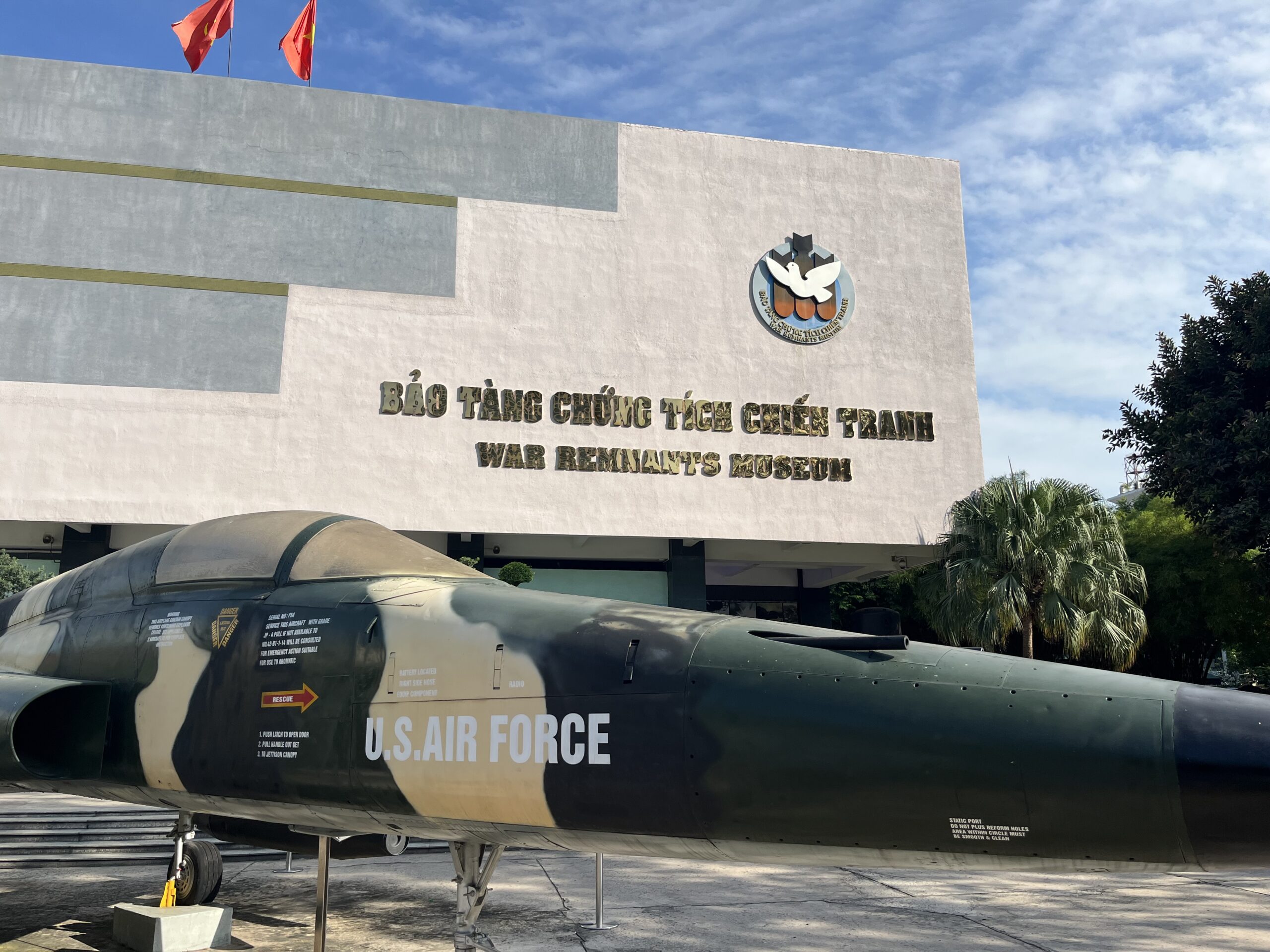
Not far from our hotel is the Ho Chi Minh War Remnants museum. It’s one of Vietnam’s most powerful and sobering historical sites, offering a stark portrayal of the devastating impacts of the Vietnam War. Established in 1975, the museum houses a vast collection of photographs, military equipment, and personal accounts that document the atrocities and human cost of the conflict, particularly from the perspective of the Vietnamese people.

It’s fascinating to see so much equipment that we’ve seen in news footage and movies about the Vietnam war (In Vietnam, they call it the American war). You can’t help but feel that America brought the might of its military to bear on a completely outmatched opponent – and there’s no doubt that this museum tells the story of that conflict from the point of view of the Vietnamese. These aren’t the stories we’ve grown up with in the west.

The museum recreates and documents the prisons run by the US and the South Vietnamese government, showing the tiny cells where prisoners were tortured and some of the equipment used in that process. We’ve been to the concentration camp in Dachau, Germany, and this seemed, if anything, even more inhumane.

Exhibits focus on the effects of chemical warfare, such as Agent Orange, and include graphic images and stories that reflect the long-term consequences of war. One of the photos on display is the Pulitzer prize-winning photo of ‘Napalm girl’, Kim Phuc. I have had the honour of meeting and talking to Kim Phuc when she visited New Zealand – a remarkable woman, somehow brimming with forgiveness for those who carried out the napalm attack of her village.

The museum serves not only as a historical archive. There are displays of the support Vietnam received from the international community, but also as a poignant reminder of the importance of peace and reconciliation.
I would hesitate to draw parallels between Vietnam and current conflicts in the world – but you can’t help but feel that they exist. One quote displayed in the museum is a quote from the Nuremberg trials of Nazi leaders following the Second World War. You can’t help but feel that eight decades later there is a lesson to learn:

A lesson for the future from the past.
